If you own a home in Parrish and rely on a private well for your water supply, scheduling a professional service visit is one of the smartest things you can do for your property. But many homeowners aren’t sure what to expect when the technician pulls up. Knowing what happens at each stage of the visit helps you prepare, ask the right questions, and understand the findings. Here’s a clear, step-by-step look at how a water well service visit in Parrish typically unfolds.
Before the Technician Arrives: What You Should Have Ready
A little preparation goes a long way. If you have records from previous well inspections, pump installations, or water test results, gather those ahead of time. The technician will want to know the approximate age of your well, any recent changes in water pressure or odor, and whether you’ve noticed sand or sediment in your fixtures.
Manatee County domestic wells draw from the Floridan Aquifer System — a deep limestone aquifer that serves much of West Central Florida. Knowing the general depth of your well, if possible, helps the technician put your system’s performance in context right from the start.
Step 1: The Site Walkthrough
The first thing a technician does when arriving at your property is walk the site. They’re looking at the wellhead, the condition of the well casing, and whether anything in the surrounding area poses a contamination risk — things like septic systems, fertilizer storage, or surface drainage patterns that run toward the well.
In Parrish, where newer subdivisions sit alongside older rural properties, site conditions can vary significantly from one address to the next. A technician experienced with Manatee County domestic well systems will know what’s common in the area and what warrants closer attention.
They’ll also check for physical damage to the wellhead cap or casing. A cracked or loose cap can allow insects, rainwater, or surface contaminants to enter the well — a problem that’s easy to overlook but important to catch early.
Step 2: Water Table and Pressure Assessment
Next, the technician evaluates your water table and system pressure. Florida’s aquifer levels fluctuate with seasonal rainfall, drought cycles, and nearby development. After a dry stretch — which Parrish sees regularly during the winter months — water tables can drop enough to affect pump performance.
The technician will check static water level, flow rate, and pressure readings at the wellhead. If your pump is working harder than it should to maintain pressure, that’s a signal worth investigating further. Low or inconsistent pressure is one of the most common complaints reported before a well service call.
Step 3: Pump Inspection and Electrical Checks
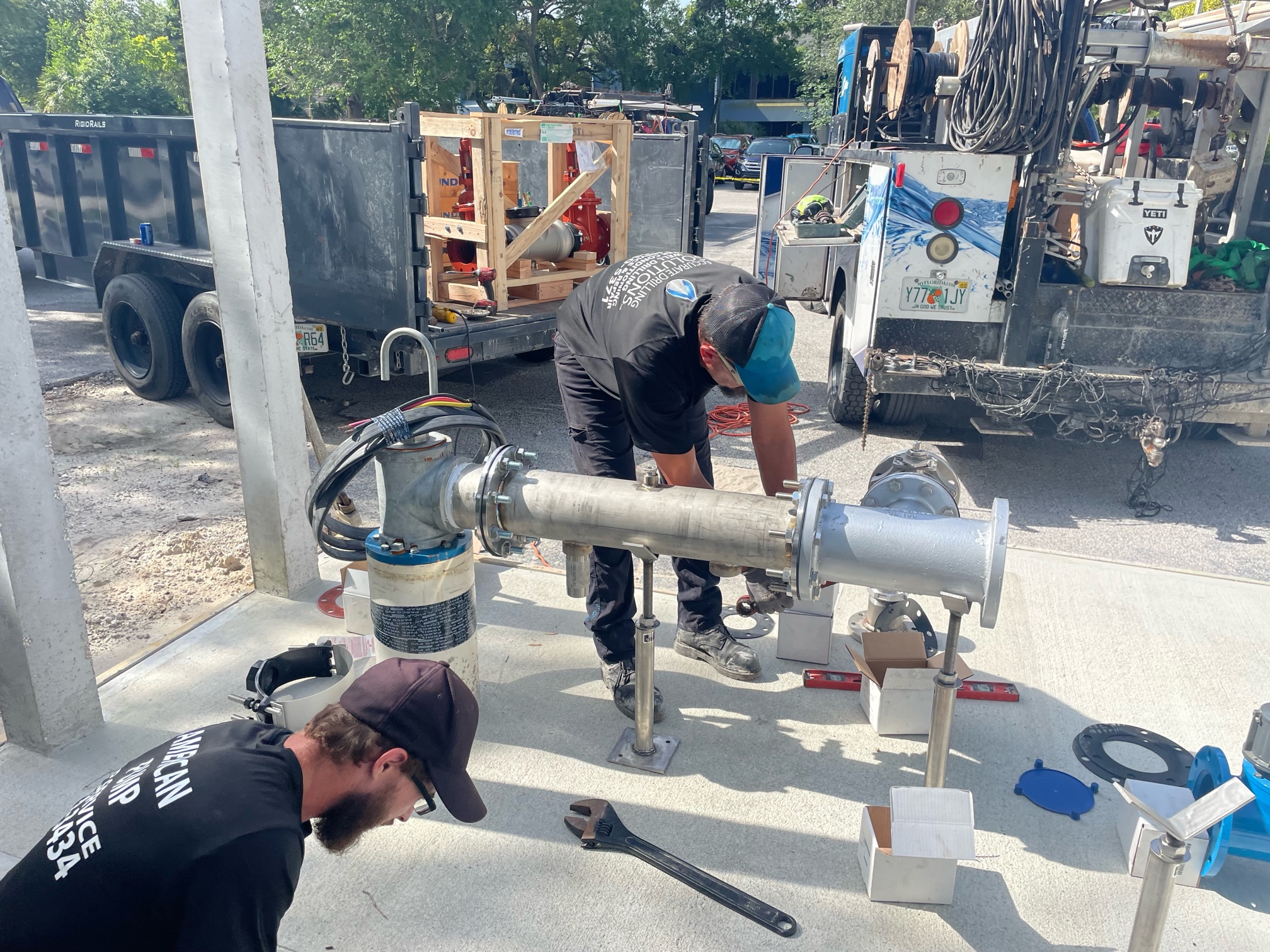
Most residential wells in Parrish use a submersible pump installed deep in the casing. The technician will test the pump motor’s performance, check electrical connections, and measure amp draw to see whether the motor is running within its normal range. A motor drawing too many amps is often a sign of wear or a developing mechanical problem.
As a premier dealer of Grundfos pumps, Accurate Drilling Solutions works with high-quality pump systems and understands how these units should perform under Florida conditions. Submersible pumps exposed to sand intrusion — a real concern in certain Manatee County formations — can wear out faster than expected. The inspection will flag that kind of wear before it turns into a full failure.
The pressure tank is also checked during this stage. A waterlogged pressure tank causes the pump to cycle on and off more frequently than it should, shortening the pump’s overall lifespan. If the tank’s pre-charge is off, the technician will note it.
For a closer look at pump repair procedures, learn more about our water pump repair services.
Step 4: Water Sampling
Water quality testing is a core part of a thorough well inspection process in Florida. The technician will collect water samples to be tested for common contaminants and quality indicators. In Parrish and throughout Manatee County, a few issues come up more often than others:
- Hydrogen sulfide (sulfur water): The rotten-egg odor that affects many Florida wells, especially those drawing from deeper limestone zones.
- Hardness and mineral content: Florida groundwater tends to be high in calcium and magnesium, which causes scaling in pipes and appliances.
- Bacterial contamination: Surface intrusion or a compromised casing can introduce bacteria into the well water supply.
- Sand and sediment: Sand intrusion can affect water clarity and damage downstream fixtures and appliances.
Depending on the scope of the service visit, samples may be sent to a certified lab or tested on-site with field equipment. Either way, the results give you a clear picture of your current water quality.
Step 5: Video Inspection When Warranted
In some cases, especially for older wells or when the technician spots something unusual, a downhole video inspection may be recommended. A camera is lowered into the well casing to check for cracks, corrosion, biofouling, or debris. This removes the guesswork entirely.
Video inspections are particularly useful after major storms. Parrish sits in a part of Florida that sees significant tropical storm activity, and heavy rain events can affect well integrity in ways that aren’t visible from the surface. If you haven’t had a video inspection in several years, it’s worth asking about during your visit. You can learn more about video well inspections and what they reveal.
Step 6: The Technician Review at the End of the Visit
At the close of the appointment, the technician will walk you through their findings. This is your opportunity to ask questions. A good technician won’t rush this conversation. You should leave the visit knowing the current condition of your well, pump, and water quality — and what, if anything, needs attention.
The review will typically cover what’s working well, what showed early signs of wear, and what requires action either immediately or in the near future. Nothing should be left vague. If a follow-up is needed, the technician will explain why and what the next steps involve.
The team at Accurate Drilling Solutions serving Parrish takes this closing review seriously. Homeowners deserve a plain-language explanation of their system’s health — not just a service sticker on the wellhead.
Keeping Your Well on a Service Schedule
A single service visit gives you a snapshot of your well’s condition. A regular maintenance schedule gives you long-term protection. Florida’s climate is hard on well systems — heat, humidity, heavy rain seasons, and drought cycles all take a toll. Staying ahead of problems is almost always less disruptive than responding to them after something fails.
If you’d like to explore a structured maintenance plan, review our maintenance agreement options to see how scheduled service can protect your system year-round.
Frequently Asked Questions
How long does a typical well service visit take?
Most residential well service visits take between one and three hours, depending on the scope of the inspection and what the technician finds. A straightforward check on a well in good condition moves faster than a visit where the pump needs closer evaluation or water sampling requires additional steps. Your technician will give you a better time estimate once they’ve done the initial site walkthrough.
Do I need to be home during the service visit?
It’s strongly recommended that you be present, especially for the closing review. The technician will want to walk you through their findings in person and answer any questions you have. You’ll also need to provide access to the wellhead, pressure tank, and any interior connections. If you can’t be there, make sure someone familiar with the property is available.
What are the most common problems found during a well inspection in Parrish?
In the Parrish and Manatee County area, technicians frequently find issues related to sulfur odor, mineral buildup, aging pump components, and pressure tank problems. Sand intrusion from certain aquifer formations can also cause premature pump wear. Well casings on older properties sometimes show signs of surface water infiltration, especially after heavy rain seasons.
How often should a domestic well be serviced in Florida?
For most Florida homeowners, an annual well inspection is a reasonable baseline. Properties with older systems, known water quality issues, or high daily usage may benefit from more frequent service. Florida’s wet-dry seasonal cycle and active storm seasons mean that wells here face more environmental stress than in many other parts of the country, making regular checkups a smart investment.
Will the technician test my water quality during the visit?
Water sampling is typically included in or available as part of a well service visit. The scope of testing can vary — basic field tests can be done on-site, while more comprehensive panels are sent to a certified laboratory. If you have specific concerns about sulfur, bacteria, hardness, or other contaminants, let the technician know before the visit so the right tests can be arranged.
What should I do if my well has a noticeable odor or change in water color?
Don’t ignore changes in your water’s smell, taste, or appearance. Sulfur odor, discoloration, or unusual taste can indicate changes in your aquifer zone, pump issues, casing problems, or bacterial presence. Stop using the water for drinking until you’ve had a professional evaluation. Schedule a service visit promptly so the cause can be identified and addressed with the right solution.
Ready to schedule a well service visit for your Parrish property? Call Accurate Drilling Solutions at 813-643-6161 to speak with a knowledgeable technician and get your appointment on the calendar.
continue reading
Related Posts
If your geothermal system in Largo is showing signs of reduced performance, the supply well may be the source of the problem. This article covers the key symptoms of well yield decline, limestone aquifer scaling, and reduced system efficiency — and what to do about them.
Selecting the right well pump system in Zephyrhills involves more than picking a pump off a shelf. This guide walks Pasco County property owners through submersible vs. jet pump comparisons, Florida-specific sizing factors, and why professional installation is the only responsible path forward.

Largo's coastal position, shallow Floridan Aquifer access, and aging residential well infrastructure create specific stress patterns on well pump systems. Understanding these local conditions helps homeowners protect their equipment before problems develop. Learn what makes Largo different — and what to do about it.