Commercial pump systems in Tampa work harder than most property owners realize. Between the region’s high seasonal demand, Florida’s limestone aquifer characteristics, and the constant threat of sand intrusion, a pump system that isn’t actively maintained will eventually underperform — or fail at the worst possible moment. For HOAs, CDDs, and commercial property managers, that’s not just an inconvenience. It’s a liability.
The good news: a structured evaluation and maintenance routine can catch most problems early. Here’s a practical, step-by-step approach to keeping your commercial pump system running reliably year-round.
Step 1: Establish a Performance Baseline
Before you can recognize a problem, you need to know what “normal” looks like for your system. Start by documenting your pump’s current flow rate, operating pressure, amperage draw, and run cycles. Most commercial systems should cycle at consistent intervals. If your pump is short-cycling — turning on and off rapidly — or running longer than usual to meet demand, something has already changed.
Keep a simple log. Note readings monthly and compare them over time. Gradual pressure drops or increasing amp draw are early indicators of wear, partial blockage, or a developing mechanical issue. This baseline data becomes invaluable during any water pump repair or diagnostic visit.
Step 2: Inspect the Pressure Tank and Controls
The pressure tank is one of the most overlooked components in a commercial well pump system. A waterlogged tank — one where the bladder has failed and water fills the entire tank — causes the pump to short-cycle, which dramatically shortens motor life.
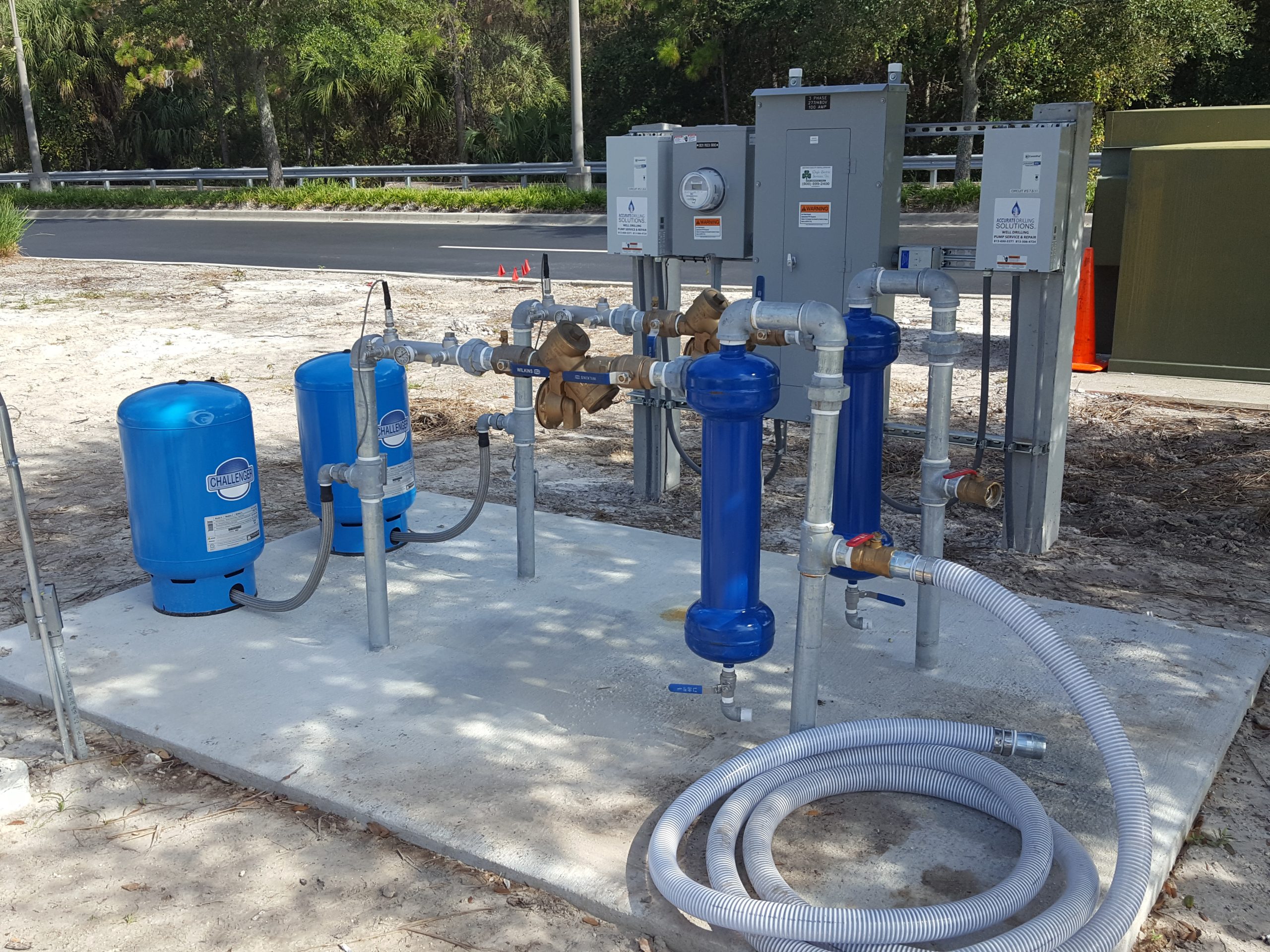
To check tank pressure, shut off the pump and release pressure at a nearby faucet. Then use a tire gauge on the tank’s Schrader valve. The pre-charge pressure should typically be 2 PSI below the system’s cut-in pressure. If water comes out of the valve instead of air, the bladder has failed and the tank needs replacement. Also inspect pressure switches and control panels for corrosion, which is common in Tampa’s humid coastal environment.
Step 3: Schedule a Professional Video Inspection
Tampa’s groundwater draws primarily from the Floridan aquifer — a limestone formation that, while productive, introduces specific challenges. Sand intrusion is a real issue, particularly after heavy rain events or nearby construction activity. Mineral scaling from hard water and hydrogen sulfide (sulfur water) can coat pump components and restrict flow over time.
A professional video inspection of the well casing and pump assembly gives you a clear picture of what’s actually happening below the surface. This is especially valuable for commercial properties that rely on high-volume output. Video inspection can identify casing damage, screen buildup, or debris before they cause a full system failure.
Step 4: Evaluate Your Grundfos Pump System Components
Grundfos pump systems are widely used in commercial and municipal applications across the Tampa Bay region because of their efficiency and reliability. But even well-engineered equipment requires periodic attention. When evaluating a Grundfos system, check the following:
- Motor temperature: Overheating is one of the leading causes of premature motor failure. Verify the motor is operating within its rated temperature range.
- Impeller condition: Sand and mineral deposits can erode impeller stages over time, reducing output pressure and efficiency.
- Shaft seal integrity: A leaking shaft seal introduces water into the motor housing and accelerates corrosion.
- Variable frequency drive (VFD) settings: Many commercial Grundfos installations use VFDs to manage flow. Confirm the drive parameters haven’t drifted and that the unit is receiving clean power.
If your system uses a control panel with fault logging, review recent error codes even if the system appears to be running normally. Fault history often reveals intermittent issues that haven’t yet caused visible symptoms.
Step 5: Address Florida-Specific Risk Factors
Commercial properties in Tampa face a few regional factors that should be part of any maintenance checklist.
Hurricane and Storm Prep
Before hurricane season peaks, verify that your pump system’s electrical connections are properly sealed and elevated where possible. Confirm that the control panel has surge protection in place. Power surges during storms are a leading cause of commercial pump motor damage in Florida.
Sulfur Water and Mineral Scaling
Hydrogen sulfide is common in Tampa Bay area groundwater and is corrosive to metal pump components. If your water carries a sulfur odor, an in-line treatment system can extend pump life significantly. Mineral scaling from hard water should also be addressed — buildup inside pump stages and check valves gradually chokes system output.
Sand Intrusion
Heavy rainfall and aquifer pressure changes can introduce sand into a well. Sand accelerates wear on impellers and check valves. If you notice grit in your water or unusual noise from the pump, address it promptly. A sand separator or screen replacement may be all that’s needed.
Step 6: Set Up a Formal Maintenance Agreement
Reactive service is almost always more disruptive and costly than planned maintenance. For HOAs, CDDs, and commercial properties managing multiple pump systems, a structured service plan keeps everything on schedule without relying on someone to remember when the last inspection happened.
A maintenance agreement with a qualified Tampa property pump service provider establishes inspection intervals, documents system history, and ensures that a trained technician — not a general contractor — is evaluating your equipment. This is particularly important for Grundfos systems and other variable-speed commercial equipment that requires specific technical familiarity.
Step 7: Know When to Call for Professional Service
Some warning signs should prompt an immediate service call rather than a wait-and-see approach. Contact a qualified technician if you observe any of the following:
- Sudden loss of pressure or complete loss of flow
- Pump running continuously without reaching cutoff pressure
- Visible rust, sediment, or discoloration in the water
- Unusual grinding, humming, or clicking sounds from the pump assembly
- Tripped breakers or repeated electrical faults at the control panel
- Significant increase in energy consumption without explanation
Accurate Drilling Solutions in Tampa works with commercial properties, HOAs, and CDDs across the region to diagnose these issues quickly. The team carries parts for Grundfos and other major commercial pump manufacturers, which reduces wait time when components need replacement.
Build Reliability Into Your System — Don’t Chase It
The properties that avoid emergency pump failures aren’t just lucky — they’re following a consistent evaluation and maintenance routine. Documenting performance, scheduling professional inspections, and addressing small issues before they compound is how commercial pump systems stay dependable through Tampa’s demanding heat, storm seasons, and high-use periods.
Whether you manage a single commercial building or a large community served by multiple well systems, the steps above give you a practical framework to work from. For technical support or to schedule a commercial water pump inspection, the team at Accurate Drilling Solutions is available at 813-643-6161.
Frequently Asked Questions
How often should commercial pump systems in Tampa be professionally inspected?
Most commercial pump systems benefit from a professional inspection at least once per year. Properties with high daily demand, aging equipment, or known water quality issues — such as sulfur content or sand intrusion — should consider semi-annual service visits. Consistent inspection intervals allow technicians to track performance trends and catch developing problems before they cause downtime or equipment damage.
What are the signs that a Grundfos pump system needs service?
Common indicators include reduced flow or pressure, increased energy consumption, short-cycling, unusual motor noise, and fault codes logged by the control panel or VFD. Grundfos systems are durable, but impeller wear, seal degradation, and drive parameter drift can affect performance over time. A technician familiar with Grundfos commercial equipment can interpret fault logs and run diagnostics to pinpoint the issue accurately.
Why is sand intrusion a concern for Tampa commercial wells?
Tampa’s groundwater comes primarily from the Floridan limestone aquifer. Fluctuations in aquifer pressure — often triggered by heavy rainfall or nearby excavation — can allow fine sand and sediment to enter the well. Sand accelerates wear on pump impellers and check valves, reduces output efficiency, and can introduce grit into the water supply. A sand separator or well screen inspection can address the issue before it causes significant pump damage.
What is a pressure tank and why does it matter for commercial pump systems?
A pressure tank stores pressurized water so the pump doesn’t have to cycle on every small draw. In commercial systems, a failed pressure tank bladder causes rapid short-cycling, which puts excessive stress on the pump motor and dramatically shortens its service life. Regular pressure checks and bladder inspections are a simple but important part of any commercial well pump maintenance routine.
Do HOAs and CDDs need a different maintenance approach than single commercial properties?
HOAs and CDDs typically manage higher water demand and may operate multiple pump systems simultaneously. This makes documented maintenance schedules and formal service agreements even more important. System redundancy planning, regular performance logging, and working with a provider who understands multi-system commercial well pump maintenance helps community associations avoid service interruptions that affect large numbers of residents.
How does hurricane season affect commercial pump systems in the Tampa Bay area?
Storms bring power surges, flooding risk, and debris that can damage pump controls and electrical components. Before peak season, verify that surge protection is installed at the control panel, check that all electrical connections are sealed, and document current system performance so post-storm comparisons are possible. A pre-season inspection is one of the most practical steps a Tampa commercial property can take to protect its water system investment.
continue reading
Related Posts
Plant City property owners rely on private wells that can show subtle warning signs long before a full failure occurs. This checklist covers the key indicators — from declining yield and sulfur odor changes to sediment increases and aging well structure — that signal it's time for a professional water well evaluation.

Bradenton well owners should know the early warning signs of a failing pump before a minor issue becomes a full system failure. This checklist covers pressure fluctuations, air in faucets, sand intrusion, unusual cycling, and other symptoms tied to Manatee County aquifer conditions. Catching these signs early can prevent costly emergencies.

Improperly closing an old well in Lakeland or Polk County can trigger permit violations, groundwater contamination liability, and complications during property sales. This article outlines the most common well abandonment mistakes and explains exactly how to avoid each one.