Florida’s fall dry season sneaks up fast. One week you’re managing runoff from afternoon storms, and the next your lawn is cracking and your irrigation system is running overtime. For Auburndale property owners who rely on a private irrigation well, now is the time to get ahead of that shift — before your system is working its hardest and a problem costs you the most.
This checklist walks you through a thorough irrigation well prep in Auburndale that you can print and follow step by step. Work through it before the dry season sets in and you’ll know exactly where your system stands.
Why Fall Prep Matters for Polk County Irrigation Wells
Polk County sits over the Floridan Aquifer System, a deep limestone aquifer that supplies most of Central Florida’s groundwater. During dry months, water table levels drop. That puts more strain on your pump, increases the risk of drawing sand and sediment, and can reduce your overall water output at exactly the wrong time.
Auburndale’s climate means your irrigation system may have been running hard all summer. Components wear down. Connections loosen. Small problems that were easy to ignore during the wet season can become significant failures when demand peaks. A Polk County irrigation well inspection checklist done now gives you time to fix issues before they become emergencies.
Your Irrigation Well Prep Checklist for Florida’s Fall Dry Season
Print this out and check off each item. If you find anything that raises questions, note it and follow up with a licensed well contractor.
Step 1 — Inspect Your Pump Pressure
- Check your pressure tank gauge at rest. The reading should hold steady, not cycle up and down rapidly.
- Note the cut-in and cut-out pressure your pump system uses. These should be consistent with your system’s settings.
- Listen for the pump short-cycling — turning on and off every few seconds. This often signals a waterlogged pressure tank or a failing bladder.
- Inspect the pressure switch for corrosion, insect nests, or loose wiring.
Step 2 — Check for Sand Intrusion
- Run water from a hose bib or irrigation zone and watch the output closely. Sandy or cloudy discharge at startup is a warning sign.
- Check your pump intake screen if accessible. Sand and fine sediment can clog screens and reduce flow.
- Look at the inside of your filter housing if your system has one. Heavy sand buildup suggests the well screen may be deteriorating or the pump intake is set too deep.
- Sand intrusion accelerates pump wear significantly. If you’re seeing it, have it evaluated before dry season demand increases.
Step 3 — Test Water Output
- Run your irrigation system zone by zone. Note any zones with weak pressure or reduced coverage.
- Compare current output to what you expect based on past use. A noticeable drop in flow rate can signal pump wear, a drop in water table, or a partially clogged screen.
- Check for air in the lines. Sputtering or air-burst discharge can mean the pump is struggling to maintain prime or the water level has dropped near the intake.
Step 4 — Inspect All Electrical Connections
- Look at your control panel and wiring for signs of corrosion, moisture intrusion, or heat damage.
- Check that all breakers related to the pump system are properly labeled and functioning.
- If your system has a capacitor start motor, listen for unusual humming or delayed starts — both are signs the capacitor may be failing.
- Confirm your surge protection is in place. Lightning events during Florida’s storm season can damage pump electronics, and fall storms are still possible in Auburndale well into October.
Step 5 — Examine System Connections and Hardware
- Walk the line from your wellhead to your irrigation controller. Look for dripping fittings, cracked pipe, or evidence of recent leaks.
- Inspect the wellhead seal and cap. It should be secure, intact, and free of cracks. A compromised seal allows surface water, insects, and contaminants to enter the well.
- Check all union fittings and valves in your pump house or enclosure. Hand-tighten any loose connections and flag anything that appears corroded.
- Confirm your check valve is holding. If the pump loses prime every time it shuts off, the check valve may be failing.
Step 6 — Review Your Irrigation Controller Settings
- Update your controller schedule to reflect fall watering needs. Less frequent deep watering is often more effective than daily short cycles during dry months.
- Confirm all zone wiring is correctly mapped in the controller. Zones that don’t respond may have wiring issues or failed solenoids — not necessarily a well problem.
- Check rain sensor functionality. A stuck or failed sensor can override your schedule and prevent watering when you need it most.
Step 7 — Schedule a Professional Well System Inspection
- If any of the above steps revealed concerns — reduced pressure, sand in the output, unusual pump behavior — schedule a licensed inspection before dry season demand peaks.
- A video well inspection can identify physical problems inside the casing, such as screen deterioration, casing cracks, or buildup that isn’t visible any other way.
- Consider a well maintenance agreement if you manage multiple irrigation zones or a larger property. Routine service catches problems early and extends equipment life.
Don’t Overlook Florida-Specific Issues
Central Florida’s limestone geology creates a few conditions worth watching for specifically. Dissolved minerals from the aquifer can build up on pump components over time, reducing efficiency. Sulfur odors, while often harmless, can sometimes indicate changes in the water source or nearby contamination and should be investigated if they’re new or worsening.
Sand intrusion is more common in Polk County than in some other parts of Florida because of the sandy soils that overlie the aquifer. If your well was drilled a number of years ago and you’re starting to see more sand in the output, a pump and screen evaluation is worth scheduling sooner rather than later.
When to Call a Professional
Some items on this checklist are easy visual and functional checks any property owner can do. Others require a licensed well contractor to evaluate properly. If you encounter reduced output you can’t explain, any sign of sand intrusion, pressure that won’t hold, or electrical issues near the pump system, those are calls to make before dry season begins — not during it.
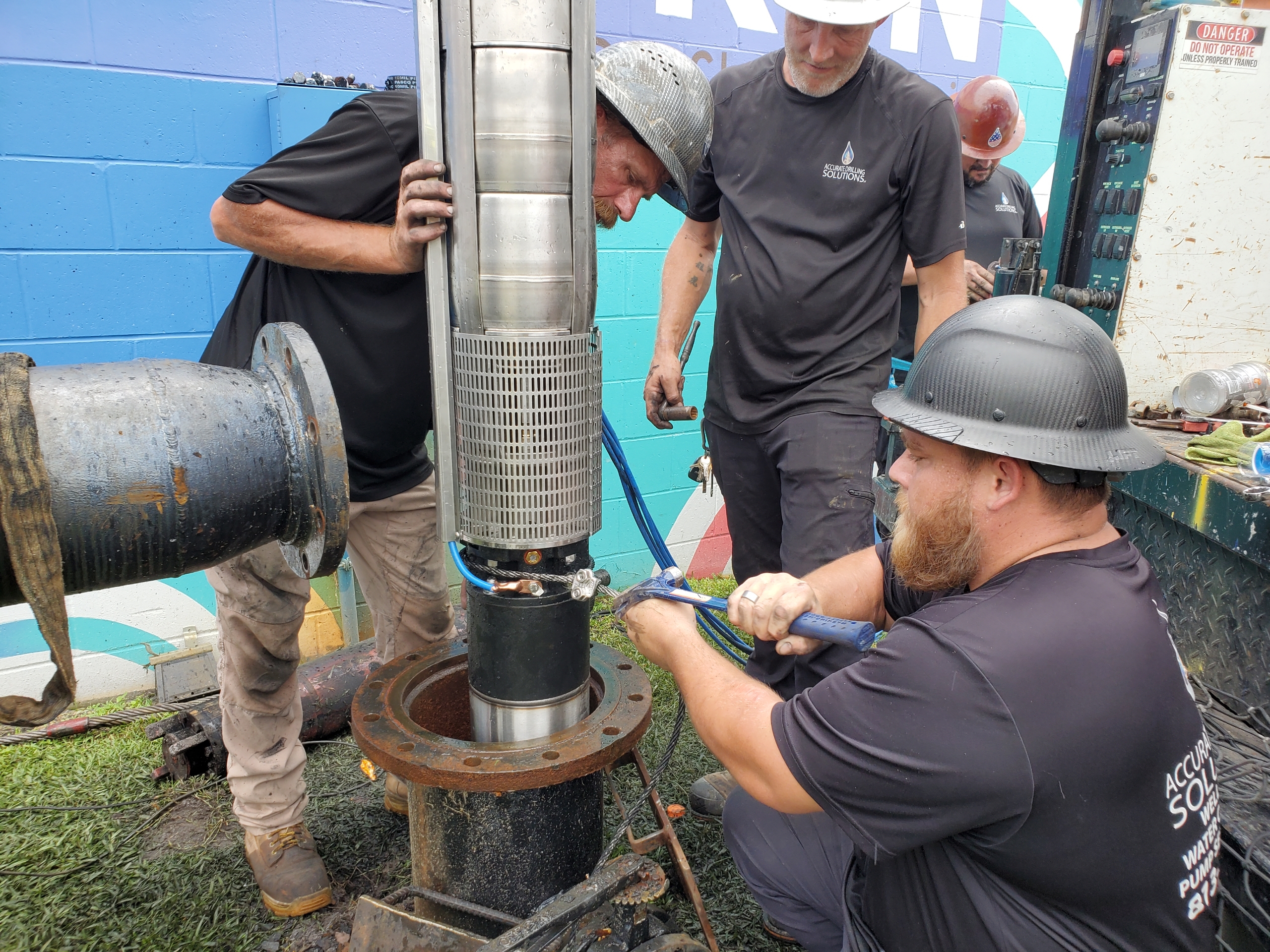
The team at Accurate Drilling Solutions serves Auburndale and the surrounding Polk County area with well drilling, pump service, and full irrigation well system inspections. If this checklist surfaces anything that needs a closer look, reach out to the Accurate Drilling Solutions team at 813-643-6161 to schedule a visit before your system is under peak load.
Frequently Asked Questions
How do I know if my irrigation well pump is losing efficiency before the fall dry season?
Common signs include reduced water pressure across zones, longer run times to achieve the same coverage, air in the lines, and pump short-cycling. Comparing current performance to previous seasons is a practical starting point. If something feels off, a professional evaluation before dry season demand increases is the most cost-effective step you can take.
What causes sand in my irrigation well output in Polk County?
Sandy output usually points to a worn or damaged well screen, a pump intake positioned too deep, or shifting sediment layers in the aquifer. Polk County’s sandy soil composition makes this more common here than in areas with denser geology. Sand accelerates internal pump wear, so it’s worth addressing quickly rather than monitoring over time.
How often should an Auburndale irrigation well be professionally inspected?
Annual inspections are a reasonable standard for residential irrigation wells, especially in Central Florida where seasonal demand swings are significant. Properties with older wells, higher-use systems, or a history of sand intrusion or pressure issues may benefit from more frequent service visits. Pre-season inspections — like this fall dry season checklist — are a smart practice.
What is a water well video inspection and when is it needed?
A video inspection uses a small camera lowered into the well casing to visually examine the interior. It can reveal screen damage, casing cracks, sediment buildup, and other issues that no surface test can detect. It’s particularly useful when you have unexplained pressure drops, reduced output, or a well that hasn’t been inspected in several years.
Can I run my irrigation well through a Florida drought advisory?
Drought advisories typically come from the Southwest Florida Water Management District and may restrict irrigation schedules rather than ban private well use entirely. However, heavy pumping during drought conditions can stress your well and pump by dropping water levels closer to the intake. Adjusting run times and watering efficiency during dry advisories protects both the resource and your equipment.
What does a well maintenance agreement typically cover?
Maintenance agreements generally include scheduled inspections, pressure system checks, pump performance testing, and priority service scheduling. They’re particularly useful for HOAs, CDDs, and commercial property managers in Auburndale who oversee multiple irrigation systems and want predictable service without coordinating individual service calls each season.
continue reading
Related Posts
Plant City property owners rely on private wells that can show subtle warning signs long before a full failure occurs. This checklist covers the key indicators — from declining yield and sulfur odor changes to sediment increases and aging well structure — that signal it's time for a professional water well evaluation.

Bradenton well owners should know the early warning signs of a failing pump before a minor issue becomes a full system failure. This checklist covers pressure fluctuations, air in faucets, sand intrusion, unusual cycling, and other symptoms tied to Manatee County aquifer conditions. Catching these signs early can prevent costly emergencies.

Improperly closing an old well in Lakeland or Polk County can trigger permit violations, groundwater contamination liability, and complications during property sales. This article outlines the most common well abandonment mistakes and explains exactly how to avoid each one.