Spring Hill sits on a stretch of Hernando County that looks peaceful on the surface — established neighborhoods, mature oaks, and a community that has grown steadily for decades. But beneath that surface lies a geological story that creates real, ongoing challenges for homeowners who rely on private wells. Spring Hill well water problems are not simply a matter of aging infrastructure or seasonal fluctuation. They are rooted in the specific geology, aquifer chemistry, and karst terrain that define this part of Florida — conditions that differ meaningfully from what well owners face in many other parts of the state.
The Floridan Aquifer: Your Water Source and Your Wildcard
Most domestic wells in Spring Hill draw from the Upper Floridan Aquifer, one of the most productive aquifer systems in the world. That productivity is a genuine asset — water is generally accessible and yields are often strong. But the Floridan Aquifer is also a limestone aquifer, and limestone chemistry introduces complications that surface water sources simply do not carry.
Water traveling through limestone picks up dissolved minerals over time. In Hernando County, that means elevated levels of calcium, magnesium, and — critically — hydrogen sulfide gas. It also means naturally high iron content in many areas. These are not contamination events. They are the predictable result of water chemistry interacting with the local geology over long periods. Understanding that distinction matters, because the solutions are very different from what you would use to address biological contamination.
Hydrogen Sulfide: The Sulfur Water Problem Spring Hill Homeowners Know Well
If you have ever turned on a Spring Hill tap and noticed a rotten egg smell, you have encountered hydrogen sulfide. Sulfur water in Spring Hill is one of the most common complaints among well owners in this area, and the Floridan Aquifer is the reason. Hydrogen sulfide forms naturally when sulfate minerals in the limestone dissolve and interact with anaerobic bacteria or organic matter in groundwater.
The smell is unpleasant, but the effects go beyond that. Hydrogen sulfide is corrosive. It accelerates wear on plumbing fixtures, water heaters, and pump components. It can cause discoloration in laundry and leave a residue on fixtures. At higher concentrations, it can be a health concern, though most residential well water in Hernando County falls below levels considered acutely harmful. Still, ignoring the problem consistently shortens the lifespan of your entire water system.
Treatment typically involves aeration, oxidizing filtration, or chlorination systems — and the right approach depends on your specific water chemistry, not a one-size-fits-all assumption. A water test is always the starting point.
Iron in Well Water: Staining, Scaling, and System Stress
High iron content is another hallmark of Hernando County aquifer water. Iron in well water across Florida is common, but Spring Hill properties often see levels that require active management rather than passive acceptance. The orange-brown staining on sinks, tubs, toilets, and concrete around hose bibs is the most visible sign. But iron also builds up inside pipes and pump components, restricting flow and reducing system efficiency over time.
Iron exists in two primary forms in well water: ferrous (dissolved, clear water iron) and ferric (oxidized, red water iron). Each form responds to different treatment methods. Some Spring Hill wells present both, which complicates treatment planning. An accurate water analysis is essential before selecting any filtration approach, because treating the wrong form of iron — or using the wrong system — can make the problem worse rather than better.
Limestone Karst Geology and What It Means for Your Well Casing
Hernando County sits squarely within Florida’s karst landscape. Karst terrain forms when water slowly dissolves soluble bedrock — in this case, limestone — creating a subsurface environment riddled with fractures, conduits, and voids. This is the same geology responsible for Florida’s sinkholes, and it directly affects the long-term integrity of water wells.
Over time, karst geology can cause shifting and settlement around a well casing. The grout seal that protects the annular space between the casing and the surrounding formation can be compromised as the formation moves or erodes. Once that seal is degraded, the well becomes vulnerable to surface water intrusion — meaning rainwater, lawn chemicals, and other contaminants can migrate downward along the outside of the casing and enter the water supply.
This is not a theoretical risk. It is a documented concern in areas with active karst geology, and Spring Hill’s geology places it directly in that category. Regular video well inspections are one of the most effective tools for identifying early signs of casing compromise before they become serious water quality or structural problems.
Why Older Wells in Spring Hill Face Compounding Risks
Spring Hill saw significant residential development beginning in the 1970s and continuing through the 1980s and 1990s. Many wells drilled during that period are now several decades old. Older casing materials, older grouting compounds, and older pump systems are all more susceptible to the corrosive effects of hydrogen sulfide and the mechanical stress that karst ground movement creates over time.
An older well does not automatically mean a failing well. But it does mean a well that warrants closer attention and more consistent monitoring. The combination of aggressive water chemistry and active karst geology creates an environment where deferred maintenance has a higher cost than it would in more geologically stable areas with neutral water chemistry.
Seasonal Patterns Add Another Layer of Complexity
Florida’s wet season — generally June through September — drives significant recharge into the Floridan Aquifer. That recharge is beneficial overall, but it also introduces variability in water quality and well pressure. Heavy rainfall events can temporarily alter the chemistry of water drawn from shallower wells or from wells with compromised casings. Spring Hill’s topography and soil permeability influence how quickly surface water reaches the water table in different neighborhoods.
After periods of heavy rain, well owners sometimes notice changes in water color, turbidity, or smell. These shifts can be early indicators of a casing issue or a sign that the water table has temporarily risen into a zone with different mineral concentrations. Either way, they are worth investigating rather than waiting out.
Matching the Right Pump System to Local Conditions
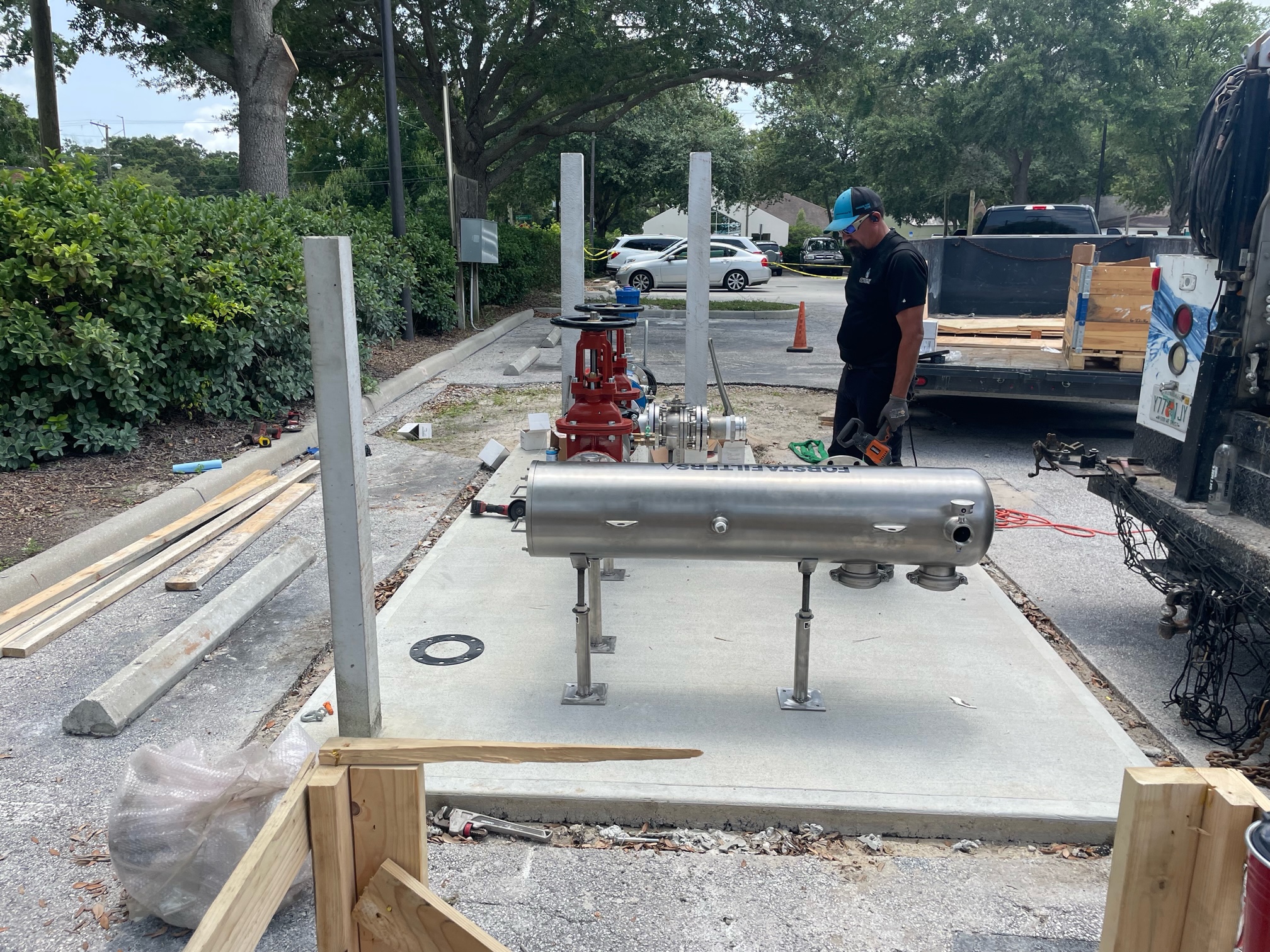
The aggressive chemistry of Hernando County aquifer water makes pump selection more important than it might be in areas with more neutral groundwater. Pump components exposed to high hydrogen sulfide and elevated iron concentrations will wear faster if the materials are not suited to those conditions. Proper sizing also matters — an undersized or oversized pump creates pressure and cycling issues that accelerate wear in any environment, but especially in one with corrosive water chemistry.
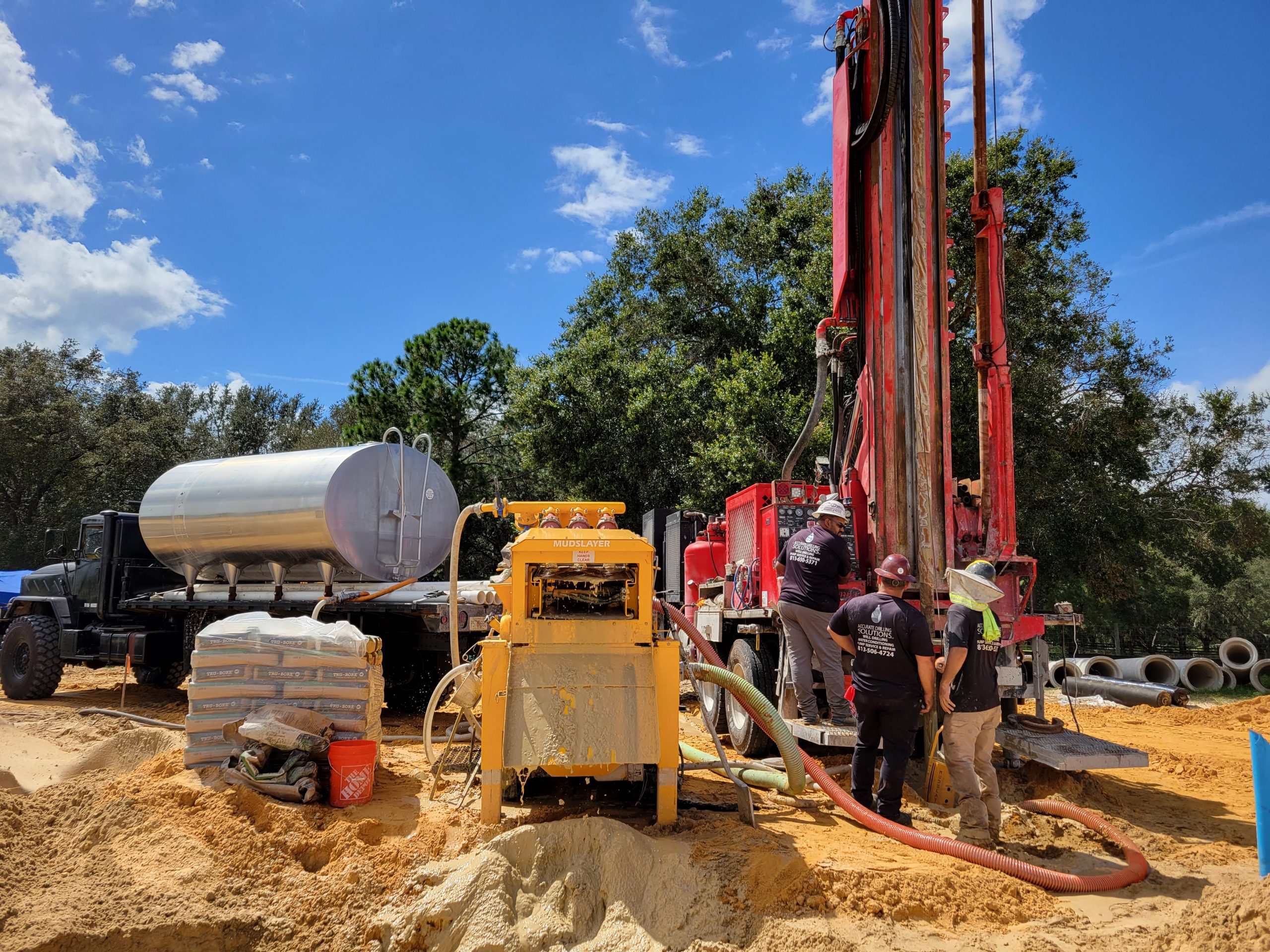
The team at Accurate Drilling Solutions in Spring Hill works with these local conditions regularly. Selecting equipment that accounts for the actual chemistry and geology of a specific property — rather than applying a generic regional standard — is what produces systems that hold up over years of service rather than requiring frequent intervention.
For those considering a new water well, understanding the local geology before drilling begins allows for better casing depth decisions, appropriate grouting strategies, and smarter pump placement from day one.
Proactive Maintenance Is Not Optional in This Environment
In areas with neutral groundwater chemistry and stable geology, well maintenance can sometimes be deferred without immediate consequences. Spring Hill is not that environment. The combination of sulfur water, elevated iron, limestone karst geology, and aging well stock means that proactive maintenance is genuinely protective — not just a sales pitch.
Annual water testing, periodic pump performance checks, and scheduled video inspections give well owners the information they need to make decisions before problems escalate. Maintenance agreements can simplify this process, ensuring that inspections and service intervals happen consistently rather than reactively.
If you have questions about your well’s current condition or want to better understand what your water chemistry is telling you, the professionals at Accurate Drilling Solutions are experienced with the specific challenges Hernando County well owners face. Reach out at 813-643-6161 to schedule a service visit or discuss what your well may need.
Frequently Asked Questions
Why does my Spring Hill well water smell like rotten eggs?
The rotten egg odor comes from hydrogen sulfide, a naturally occurring gas that forms when sulfate minerals in the limestone dissolve into groundwater. This is a recognized characteristic of water drawn from the Floridan Aquifer in Hernando County. The issue is treatable through aeration, oxidizing filtration, or other methods — but the right solution depends on your specific water chemistry, which a water test will determine.
Is high iron in my well water harmful to drink?
The U.S. Environmental Protection Agency classifies iron as a secondary contaminant, meaning it is regulated for aesthetic reasons — taste, odor, and staining — rather than as a direct health hazard at typical residential well concentrations. However, high iron levels do damage fixtures, plumbing, and appliances over time, and they signal that your water chemistry should be assessed and managed with an appropriate filtration system.
How does karst geology affect my well over time?
Karst geology creates a subsurface environment where limestone is gradually dissolved by water movement, producing voids and fractures. This can cause subtle shifts in the formation surrounding your well casing. Over years, those shifts may compromise the grout seal around your casing, creating pathways for surface water and contaminants to enter your well. Video inspections are the most reliable way to detect these changes early.
How often should a Spring Hill well be tested and inspected?
Annual water testing is a reasonable baseline for most domestic wells in Hernando County, given the active water chemistry and karst geology of the area. A video inspection every two to three years — or after any significant nearby sinkhole activity, heavy flooding, or noticeable change in water quality — is a practical approach to monitoring casing integrity before problems become costly.
Can I treat sulfur water and high iron at the same time?
Yes, combination treatment systems exist that address both hydrogen sulfide and iron in a single unit. However, because iron exists in different chemical forms and hydrogen sulfide concentrations vary by well, a proper water analysis is essential before selecting a system. Installing the wrong treatment equipment for your specific water profile can reduce effectiveness and may create secondary water quality issues.
What signs suggest my well pump is struggling with local water conditions?
Reduced water pressure, short cycling where the pump turns on and off rapidly, unusual noises from the pump, and visible rust or mineral buildup around fixtures are all indicators worth investigating. In Spring Hill’s corrosive groundwater environment, pump wear can progress faster than in areas with more neutral chemistry. A pump performance evaluation can identify whether the system is operating within normal parameters or showing signs of stress.
continue reading
Related Posts
If your geothermal system in Largo is showing signs of reduced performance, the supply well may be the source of the problem. This article covers the key symptoms of well yield decline, limestone aquifer scaling, and reduced system efficiency — and what to do about them.
Selecting the right well pump system in Zephyrhills involves more than picking a pump off a shelf. This guide walks Pasco County property owners through submersible vs. jet pump comparisons, Florida-specific sizing factors, and why professional installation is the only responsible path forward.

Largo's coastal position, shallow Floridan Aquifer access, and aging residential well infrastructure create specific stress patterns on well pump systems. Understanding these local conditions helps homeowners protect their equipment before problems develop. Learn what makes Largo different — and what to do about it.