Parrish has transformed from a quiet agricultural community into one of the fastest-growing areas in Manatee County. New subdivisions are rising across land that once held farmsteads, citrus groves, and rural homesteads. That rapid shift from rural to residential creates a challenge that many new property owners don’t expect: the presence of old, unmaintained wells that need to be properly closed before they become a safety or environmental hazard.
Well abandonment in Parrish, Florida is not a simple checkbox on a closing document. The local geology, the legacy of agricultural use, and the pace of development all combine to make this area distinctly different from other parts of the Tampa Bay region. Understanding those differences matters — whether you’re a homeowner, a developer, a CDD, or an HOA managing a large community with shared infrastructure.
Why Parrish Is Different From the Rest of Manatee County
Much of the Tampa Bay region shares the same general Florida geology: sandy soils over limestone, with the Floridan Aquifer System running deep below. But the northern Manatee County area around Parrish has its own distinct layering. The transition zone between shallow surficial aquifers and the deeper limestone formations here can be irregular, which affects how older wells were drilled and how contaminants can move if a well is improperly sealed.
Older agricultural wells in this area were often drilled to shallow depths, sometimes tapping only the surficial aquifer rather than the deeper Floridan system. These wells were functional for irrigation or livestock use decades ago, but they were rarely built to modern construction standards. Many lack adequate casing, have deteriorating grout seals, or were simply abandoned without any formal plugging when the land changed hands.
The Agricultural Legacy Beneath New Developments
Before Parrish became a suburban destination, this land was used for farming, ranching, and grove operations. Wells drilled for those purposes are scattered across the area — and many now sit beneath new lots, community green spaces, or even building footprints. Property records don’t always reflect their presence. Some wells were never formally permitted, making them invisible to title searches.
When a developer or homeowner discovers one of these legacy wells, the path forward is Manatee County well abandonment through the proper Florida Department of Environmental Protection (FDEP) process. Simply filling a well with soil or gravel is not compliant and can actually create a faster pathway for surface water contamination to reach the aquifer below. Florida well decommissioning rules exist for exactly this reason.
Local Soil and Limestone Conditions That Complicate Plugging
The soils in and around Parrish include fine sands and organic materials that were ideal for agriculture but present complications when closing a well. Loose, unconsolidated materials around an old casing can shift during the grouting process, making it harder to achieve a complete seal. If the casing itself has corroded or collapsed — common in wells that have sat unused for years — the plugging process becomes more complex.
Limestone dissolution is another factor. The karst geology underlying much of this part of Florida means that voids and fractures can exist within the rock formations. An old well that intersects one of these zones creates a direct conduit between the surface and the aquifer. Proper Florida well decommissioning requires filling that conduit completely, which sometimes means using specialized grouting techniques suited to the local formation rather than a one-size-fits-all approach.
What Happens When Abandoned Wells Are Left Unaddressed
An improperly abandoned well doesn’t just sit quietly underground. Over time, the casing deteriorates, the grout degrades, and the well becomes an uncontrolled opening into the aquifer. Fertilizers, herbicides, and other agricultural residues historically used in this part of Manatee County can migrate downward through the path of least resistance — which is often an old, unmaintained well.
There are also structural concerns. Open or poorly cased wells are a collapse hazard for people, livestock, and equipment. In a residential development context, a hidden well discovered after construction has begun creates delays, liability questions, and additional remediation costs. Addressing old well removal in Parrish before a project breaks ground is always the more practical path.
Florida’s Regulatory Requirements for Well Abandonment
Florida Administrative Code Chapter 62-532 governs water well construction and abandonment statewide, but Manatee County also applies local standards through its environmental and building permit process. Any well that is no longer in use must be abandoned according to these rules, which include using a licensed well contractor, filling the well with appropriate grouting materials, and submitting documentation to the county.
The permit and reporting requirements for Manatee County well abandonment are not optional — even for very old wells that predate modern regulations. If you’re selling a property or adding improvements, an unpermitted or improperly closed well can complicate the transaction. Lenders, title companies, and county inspectors are increasingly aware of this issue in rapidly developing areas like Parrish.
The Role of Video Inspection Before Abandonment
Before a well can be properly closed, it helps to know exactly what you’re dealing with. A downhole video inspection can reveal the condition of the casing, the depth of the well, the presence of any obstructions, and the integrity of the existing grout. This information shapes the abandonment plan, particularly for legacy wells where documentation is incomplete or missing entirely.
For property managers and CDDs overseeing large parcels in the Parrish area, video inspection is especially valuable. It removes guesswork from the process and provides a clear record of the well’s condition before and after abandonment — documentation that has real value if questions arise later.
New Construction and HOA Properties Face Extra Scrutiny
Parrish is home to a growing number of master-planned communities with CDDs and HOAs responsible for common areas, retention ponds, and shared green spaces. These entities carry liability for conditions on the land they manage. An old agricultural or irrigation well discovered within a community’s common area isn’t just a nuisance — it can create genuine legal and environmental exposure if it isn’t handled properly.
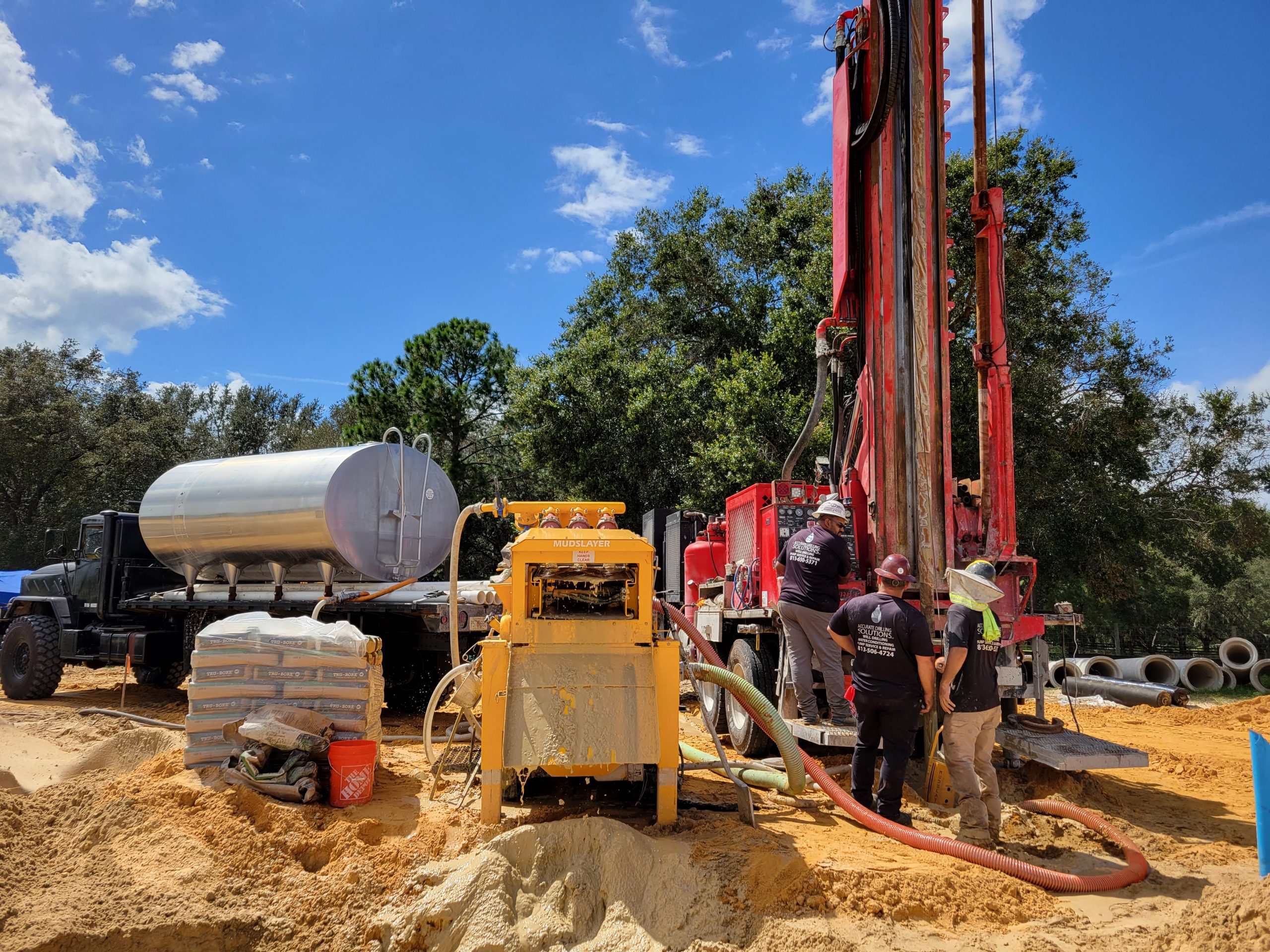
The Accurate Drilling Solutions team serving the Parrish area works regularly with HOAs, CDDs, and commercial developers to locate, assess, and properly close legacy wells under Florida and Manatee County regulations. The process is methodical: site assessment, video inspection where appropriate, permit application, grouting, and final documentation submission.
For properties that still rely on a working well for irrigation or domestic use, proper abandonment of any secondary or unused wells on the same parcel is also important. Two wells in close proximity — one active, one abandoned — can create cross-contamination risk if the inactive one isn’t sealed correctly. Water well services for active systems on the same property should be reviewed at the same time.
Working With a Licensed Contractor Who Knows This Area
Not every well contractor is familiar with the specific conditions that make well abandonment Parrish Florida properties present. The combination of shallow legacy wells, irregular limestone, loose sandy soils, and the transition from agricultural to residential use calls for experience with local formations and Manatee County permit requirements.
Accurate Drilling Solutions has worked across Manatee County and the broader Tampa Bay region long enough to understand the variations in aquifer conditions, regulatory timelines, and the practical challenges that come with old well removal in Parrish and surrounding areas. Reaching the team directly is the fastest way to get a clear picture of what your specific property may require.
If you have a property in or near Parrish with a known or suspected old well, don’t wait for a development project or a property sale to force the issue. Proper well decommissioning is straightforward when handled proactively — and considerably more complicated when addressed under time pressure. Call Accurate Drilling Solutions at 813-643-6161 to speak with someone who can help you understand your options and next steps.
Frequently Asked Questions
What does well abandonment actually involve in Florida?
Well abandonment in Florida requires a licensed well contractor to fill the well with approved grouting materials — typically neat cement or bentonite — from the bottom of the well to the surface. The goal is to permanently seal the borehole so it can no longer act as a conduit between the surface and the aquifer. A permit must be obtained, and documentation must be submitted to the county health or environmental department after the work is complete.
How do I know if my Parrish property has an old well I don’t know about?
Older agricultural wells in the Parrish area were not always formally permitted, which means they may not appear in county records. Signs of a hidden well can include a depression or slight mound in the ground, a concrete cap or pipe stub in an overgrown area, or an unusual patch of vegetation. A site assessment by a licensed well contractor, combined with a review of historic aerial imagery, can help identify wells that predate current records.
Is it required to abandon a well before selling property in Manatee County?
Florida law and Manatee County regulations require that any well no longer in service be properly abandoned by a licensed contractor. While there is no universal pre-sale trigger, unpermitted or improperly abandoned wells can create issues during title searches, lender reviews, or county inspections. Addressing well abandonment before listing a property avoids delays and potential liability for sellers and developers.
Can an old well be converted to an irrigation well instead of being abandoned?
In some cases, yes. If an existing well is structurally sound, the casing is intact, and the well is permitted appropriately, it may be possible to repurpose it for irrigation use rather than abandoning it. This requires evaluation by a licensed contractor and may involve a permit modification. However, many legacy agricultural wells in the Parrish area are not suitable for repurposing due to deteriorated casing or insufficient depth for current needs.
What makes Manatee County well abandonment different from other Florida counties?
Manatee County applies both state FDEP standards and its own local requirements for well permitting and abandonment. The county’s rapid growth, particularly in the Parrish area, has heightened awareness among inspectors and environmental staff about legacy agricultural wells. Local soil and limestone conditions — including the potential for karst voids — also mean that grouting procedures sometimes need to be adapted to the specific formation encountered during abandonment work.
How long does the well abandonment process typically take?
Timeline varies depending on permit processing, the condition of the well, and site-specific conditions. For a straightforward abandonment of a well with intact casing and complete documentation, the process from permit application to final reporting can often be completed within a few weeks. Wells with collapsed casing, unknown depths, or karst-related complications may require additional assessment steps before work can begin, which extends the overall timeline.
continue reading
Related Posts
If your geothermal system in Largo is showing signs of reduced performance, the supply well may be the source of the problem. This article covers the key symptoms of well yield decline, limestone aquifer scaling, and reduced system efficiency — and what to do about them.
Selecting the right well pump system in Zephyrhills involves more than picking a pump off a shelf. This guide walks Pasco County property owners through submersible vs. jet pump comparisons, Florida-specific sizing factors, and why professional installation is the only responsible path forward.
Largo's coastal position, shallow Floridan Aquifer access, and aging residential well infrastructure create specific stress patterns on well pump systems. Understanding these local conditions helps homeowners protect their equipment before problems develop. Learn what makes Largo different — and what to do about it.